A cleanser does not sell itself in a still photo. On TikTok, Snapchat and Reels, the viewer wants to see the gel spread, the cream melt in, and a real person use it the way they would at home. The most persuasive shots are also the safest ones.
This guide covers skincare video ads for Gulf brands selling non-medical products: what to show, how to frame a routine, and what TikTok and Meta say about claims and before and after shots. It is general guidance, not legal advice.
Show the Product, Not a Promise
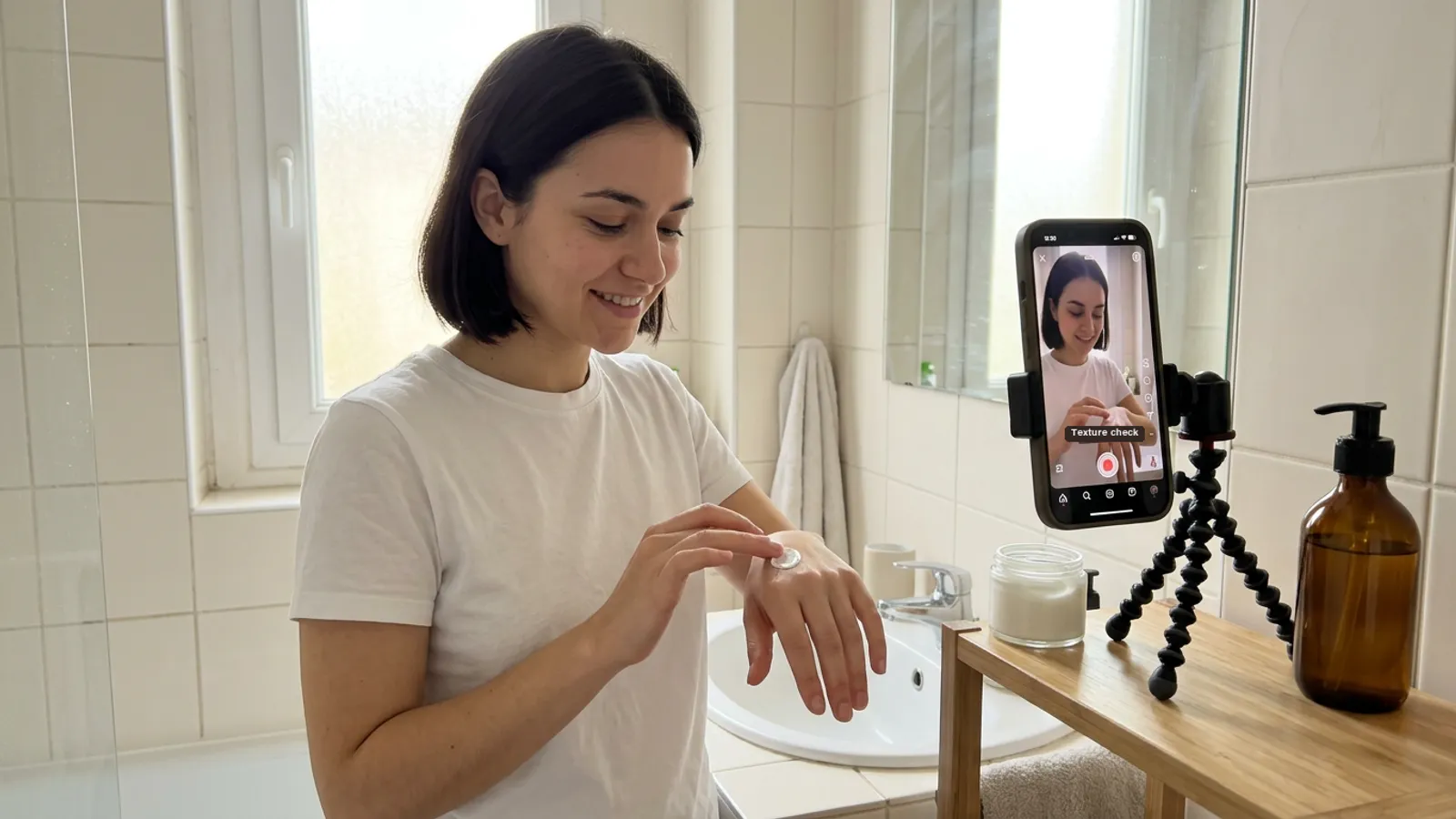
The camera can prove things words cannot. Texture, colour, scent cues and the feel of a product on skin are all facts the viewer can judge for themselves. Build your ad around them:
— Texture close-ups. A spatula lifting a whipped cream, a serum drop sliding down glass, a balm softening under a fingertip.
— Sensory sound. The pump click, the jar lid, the light pat of fingertips. ASMR style audio holds attention, and captions carry the message for viewers on mute.
— Absorption in real time. Apply, wait, touch. One uncut take is more convincing than any line of copy.
— Packaging in hand. Show the real size against a hand.
Make the Routine the Story
People buy skincare as part of a ritual, so let the ad follow one.
A UGC routine works well: a creator walks through a morning or evening routine and your product takes its natural place in it, with its step named on screen. A product review format adds honesty: the creator talks about how the product feels, how it fits their day and what they would tell a friend. Keep the language about experience ("it sinks in fast", "it feels light under make-up"), not outcomes you cannot prove.
What TikTok Says About Cosmetics Claims
TikTok's Healthcare and Pharmaceuticals policy lists market requirements for cosmetics and beauty products, and the entries covering Saudi Arabia, the UAE and Qatar set the same core conditions:
— Do not make medical claims. TikTok says a medical claim requires an approved medical license or certification.
— No performance promises that reference permanent changes to the body.
— No exaggerated performance promises about a product's effect.
— No claims to remove or cure acne, remove wrinkles or treat hair loss.
TikTok's misleading and false content policy adds that ad content and landing pages must not promise or exaggerate results. It names before and after product comparisons among the things not allowed, with the example of wrinkles disappearing after using a cream.
What Meta Says About Before & After
Meta's health and wellness standards take a different line. They allow ads for general cosmetic products depicting before and after transformation when the ad is targeted to people aged 18 or older. The same standards do not allow ads that contain statements of inferiority about physical appearance.
So a before and after may pass on Instagram and still be rejected on TikTok. If you use one on Meta, keep the lighting, angle and camera the same in both frames, target adults only, and never shame the "before". The safer habit for both platforms is to show the product working as a texture and a ritual, not as a transformation.
Check Your Local Rules
Regulators in Saudi Arabia and the UAE oversee how cosmetics are registered and promoted. The simplest rule: every claim in your ad should match what the product is registered or approved for, and nothing more. Check current local requirements before a large campaign.
Using AI to Show Skin
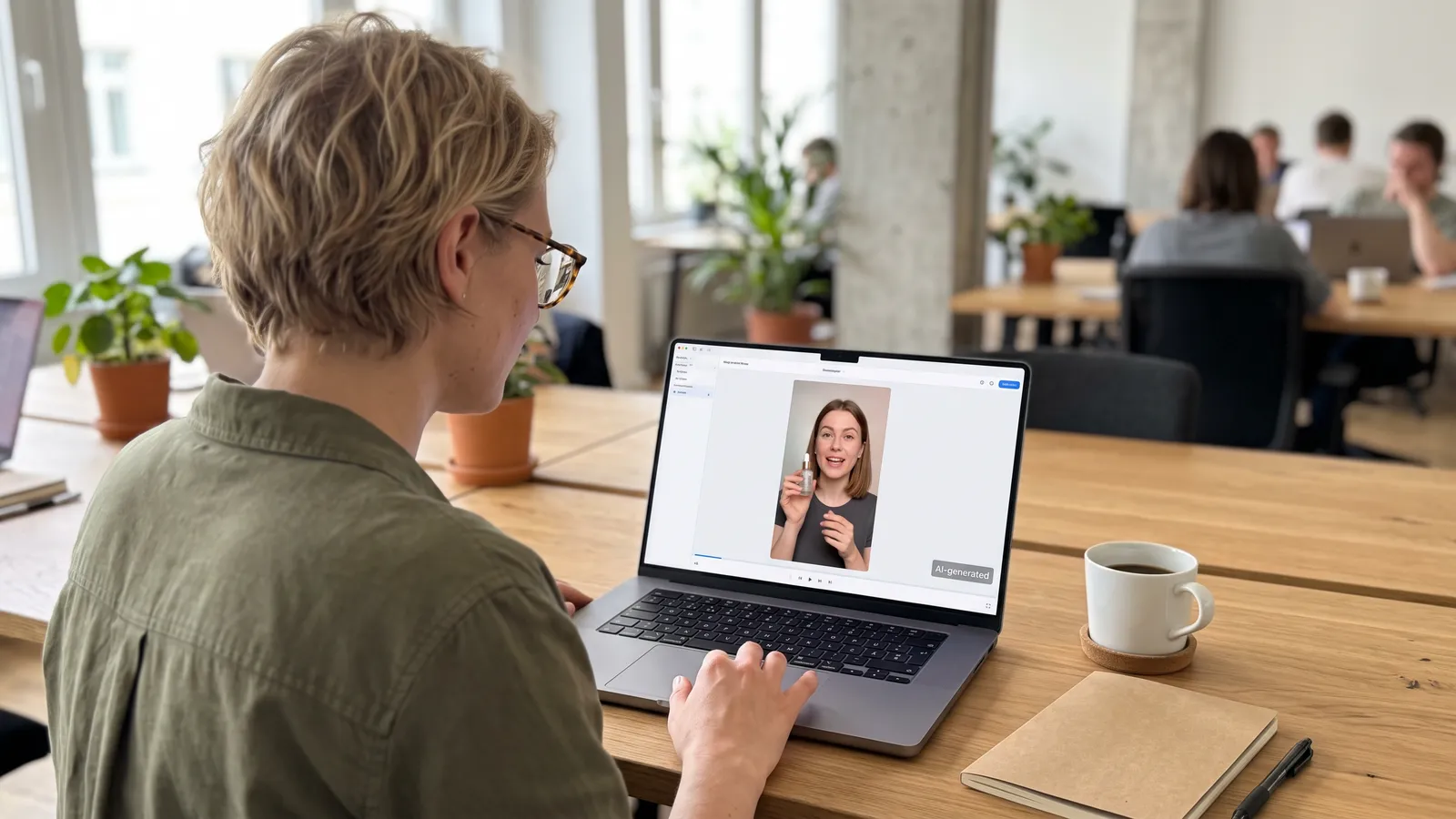
AI can place your product in many settings, but the same rules apply. The skin must look like real skin, results must never be exaggerated, and the ad should say clearly that AI was used. At Sawa Films we always disclose AI, and a director oversees every version.
Show the texture, follow the routine and let the claims stay modest. That is how skincare ads earn trust in the Gulf.
FAQ
Can I use before and after shots in skincare video ads?
It depends on the platform. Meta allows before and after for general cosmetic products targeted to adults, while TikTok's policy lists before and after effect comparisons as not allowed.
What claims should a non-medical skincare ad avoid?
Avoid medical claims, promises of permanent change and exaggerated effects. TikTok gives removing acne, removing wrinkles and treating hair loss as examples of claims that are not allowed.
Can AI show my skincare product on a model?
Yes, if the result looks true to the product and does not exaggerate what it does, and if the ad discloses that AI was used.
Sources
Misleading and false content ad policy (TikTok Business Help Center) (opens in a new tab)
Advertising Standards: Health and Wellness (Meta Transparency Center) (opens in a new tab)