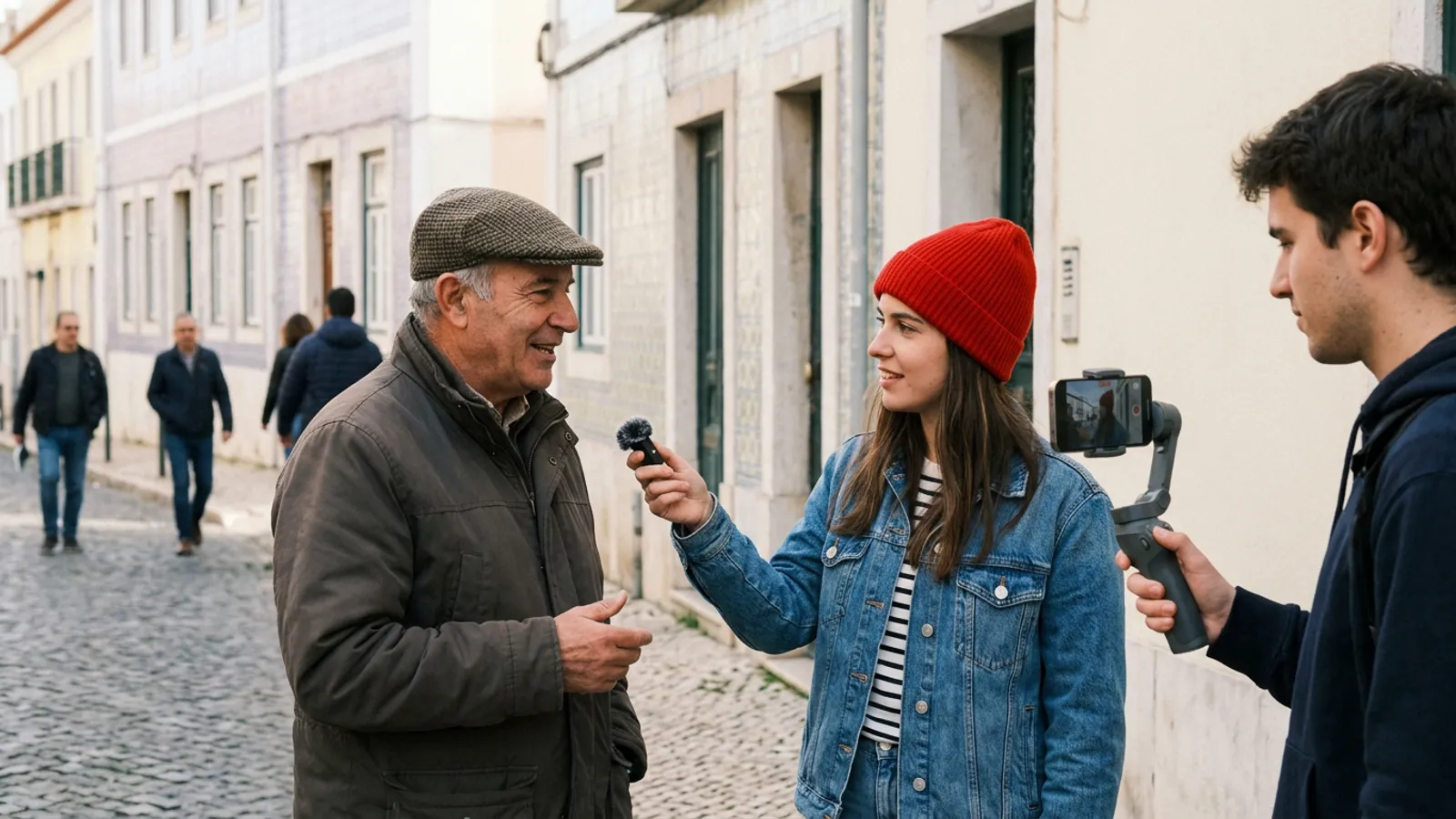
A microphone, a stranger and one simple question. Street interview video ads, often called vox pops, borrow the look of a news segment or a creator's sidewalk series, and that is exactly why viewers on TikTok, Reels and Snapchat stop to hear the answer.
Here is why the format works, how to structure it, and how to keep it honest, especially when it is made with AI.
Why the Street Interview Format Stops the Scroll
A street interview opens with a question, and a question is hard to ignore. The viewer starts answering in their head before the first person on screen does.
It also looks native to the feed. TikTok's creative guidance recommends featuring people such as creators, employees or customers to capture attention, and a DIY, not overly polished style that fits in with user content. A handheld mic and real streets do both.
Several voices in a few seconds also create rhythm and small surprises, which keeps people watching.
How to Structure a Street Interview Ad
Think of it in four beats:
- The question as the hook. Put it on screen and in the audio within the first seconds. TikTok advises introducing your proposition in the first 3 seconds and prioritising the hook in the first 6.
- Quick answers. Two to four short reactions, cut tight. Mix confident, funny and unsure answers so it feels real.
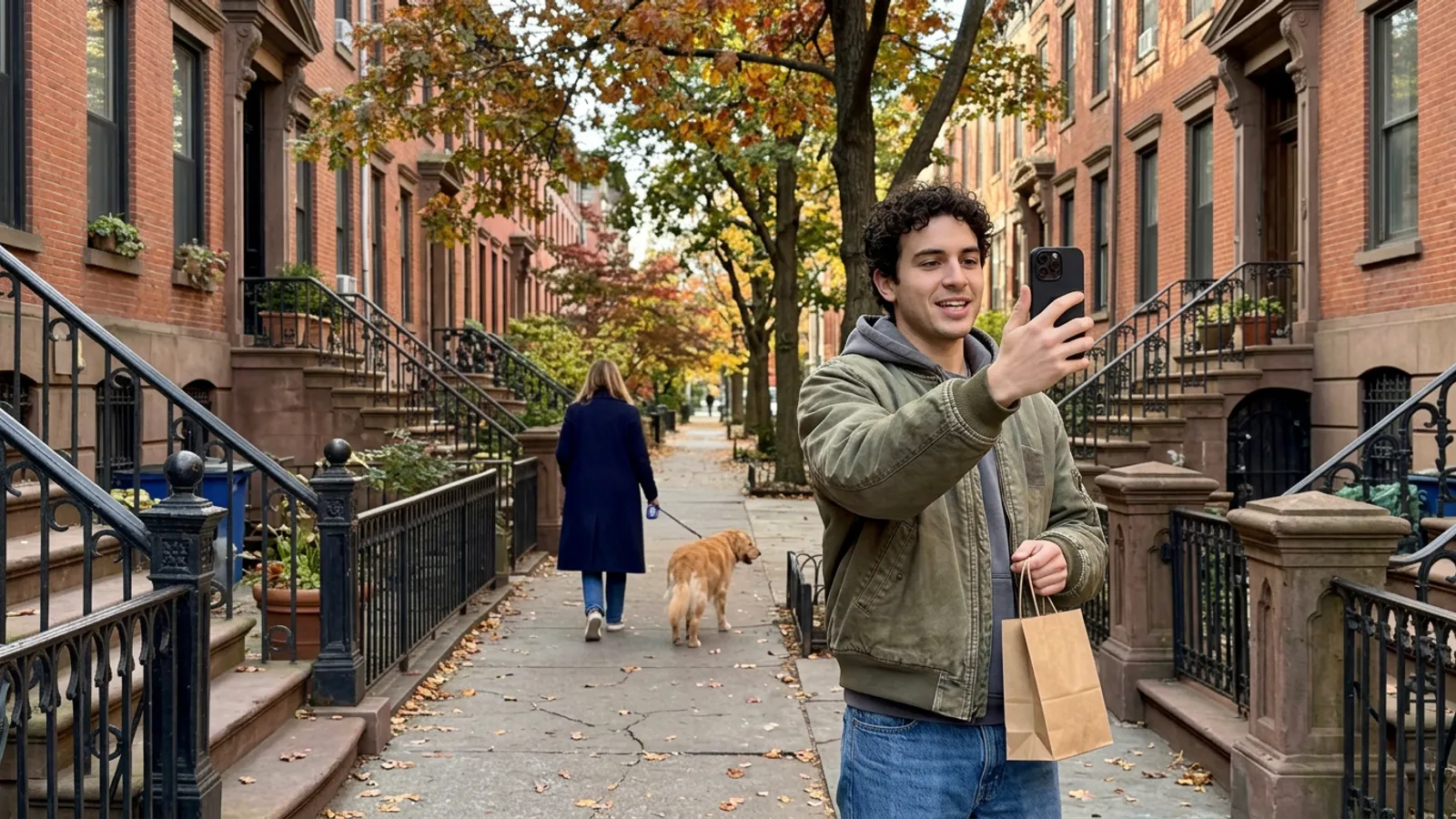
- The product moment. The interviewer hands over the product, or one person pulls it from a bag. Show it clearly, in hand, with the name readable.
- The payoff. A reaction, a twist or a final line that answers the opening question and leads to your offer.
Keep captions on throughout. TikTok suggests 5 to 10 words per second when you use on-screen text.
Question Ideas for Gulf Brands
- Fragrance, oud and bakhoor: "What scent reminds you of home?" or "Oud or musk for a wedding?"
- Abaya: "What makes an abaya right for work?" or "Which colour would you wear to Eid?"
- Skincare (non-medical): "What's the one step you never skip in your routine?" or "Do you choose a cleanser by texture or by scent?"
- Food and beverage: "Karak or coffee after Maghrib?" or "What's the best thing to bring to a family gathering?"
Good questions are easy, a little opinionated and connected to your product without naming it.
Filming in Public: Consent First
If you film real people, get clear consent from everyone who appears on camera, ideally written, and explain that the clip will be used in a paid ad. Respect anyone who says no, and take extra care around families and children.
Rules on filming in public places, shopping malls and private property differ by country and by venue. Check with the venue and follow local regulations before you shoot.
The AI Version Is a Dramatisation
AI can recreate the street interview look without a crew. That is useful for testing questions and settings, but an AI street interview is a dramatisation, not a record of real customers.
- Disclose it clearly as AI. We covered labels in our post on AI ad disclosure, and the principle is simple: never hide it.
- Never pass it off as real testimonials. In the US, the FTC's rule on fake reviews bans reviews and testimonials that misrepresent they are by someone who does not exist, naming AI-generated fake reviews, and the Endorsement Guides say ads showing "actual consumers" should use real ones or disclose that they are not.
- Keep every claim true. The UK's ASA says marketers must hold evidence that a testimonial is genuine. If a line sounds like a customer review, it must be one.
Write AI dialogue as opinions, never as invented results. At Sawa Films we always disclose AI, and a director oversees every version.
Start With One Good Question
Pick a question your customers love to argue about, film or generate a few honest answers, and let the product arrive as the natural payoff.
FAQ
What is a street interview video ad?
It is a short ad built like a vox pop: an interviewer asks people one question on camera, their quick answers form the hook, and the product appears as the payoff.
Do I need permission to film people for a street interview ad?
Yes. Get clear consent from everyone shown, explain it is for an ad, and follow the rules of the venue and your country before filming.
Can I use an AI-made street interview as a customer testimonial?
No. An AI street interview is a dramatisation. Label it as AI, avoid presenting it as real customers, and only make claims you can prove.
Sources
Creative best practices for performance ads (TikTok for Business Help Center) (opens in a new tab)
Testimonials and endorsements (Advertising Standards Authority) (opens in a new tab)