Your AI video ad is ready, the creator looks real, and the media plan starts Sunday. One question is left: do you label it, and how? For Gulf brands, AI generated ads disclosure is no longer a footnote. Platforms have built labels into their products, and regional regulators have started to speak.
Here is what TikTok, Meta and Snapchat say, what UAE and Saudi authorities have published, and how to disclose well. This is general information, not legal advice.
What TikTok Says About AI Labels
In a newsroom post dated May 9, 2024, TikTok said it had required creators to label realistic AI-generated content for over a year, and that it offers a labelling tool for that purpose. The same post announced that TikTok can read Content Credentials, the provenance metadata from the Coalition for Content Provenance and Authenticity (C2PA), and label AI content uploaded from other platforms automatically.
What this means for brands: if your ad shows a realistic AI person, voice or scene, assume TikTok expects a label, and assume the platform may detect it even if you do not add one.
What Meta Says About "AI info"
Meta explained its approach for Facebook and Instagram in an April 5, 2024 post, updated several times since (the page shows a last update on October 23, 2025). The key points:
— The label is now called "AI info". Meta renamed it from "Made with AI" on July 1, 2024.
— Meta applies it when it detects industry standard AI signals, or when people disclose that they are uploading AI-generated content.
— Since September 12, 2024, content that was only edited with AI tools shows the label in the post menu, while content detected as AI-generated keeps the visible label.
— Advertisers must disclose when they digitally create or alter certain political or social issue ads.
What Snapchat's Ad Policies Say
We did not find a dedicated AI label requirement in Snap's advertising policies. What the policies do say is clear: they prohibit "manipulating content for false or misleading purposes (whether through generative AI or through deceptive editing)", and they require that all disclosures in ads be "clear and conspicuous". An honest AI creator is not a fake testimonial.
What Gulf Regulators Have Said
Rules in the region are still evolving, so follow each platform's policy and watch for official updates.
— UAE: Gulf News reported on September 25, 2025 that the UAE Media Council said using AI to depict national symbols or public figures without prior official approval is a clear legal violation of media content standards, with fines and administrative penalties for misuse. Keep this in mind for National Day campaigns.
— Saudi Arabia: Arab News reported in May 2026 that SDAIA issued an updated version of its Deepfakes Guidelines. According to that report, creators should apply visible, tamper resistant watermarks to synthetic content and obtain explicit consent before using anyone's likeness.
Neither source sets out a specific label format for AI ads, so check with your legal adviser before a large campaign.
Why Disclosure Builds Trust
Some marketers worry that a label will cut performance. We see it the other way around. Gulf audiences are sharp; they spot AI faces quickly and they share screenshots of brands that tried to pass something off as real. A hidden AI creator that gets exposed costs you more than any label.
When viewers know upfront that the creator is AI, they judge the ad on its idea, its product and its craft.
How Sawa Discloses
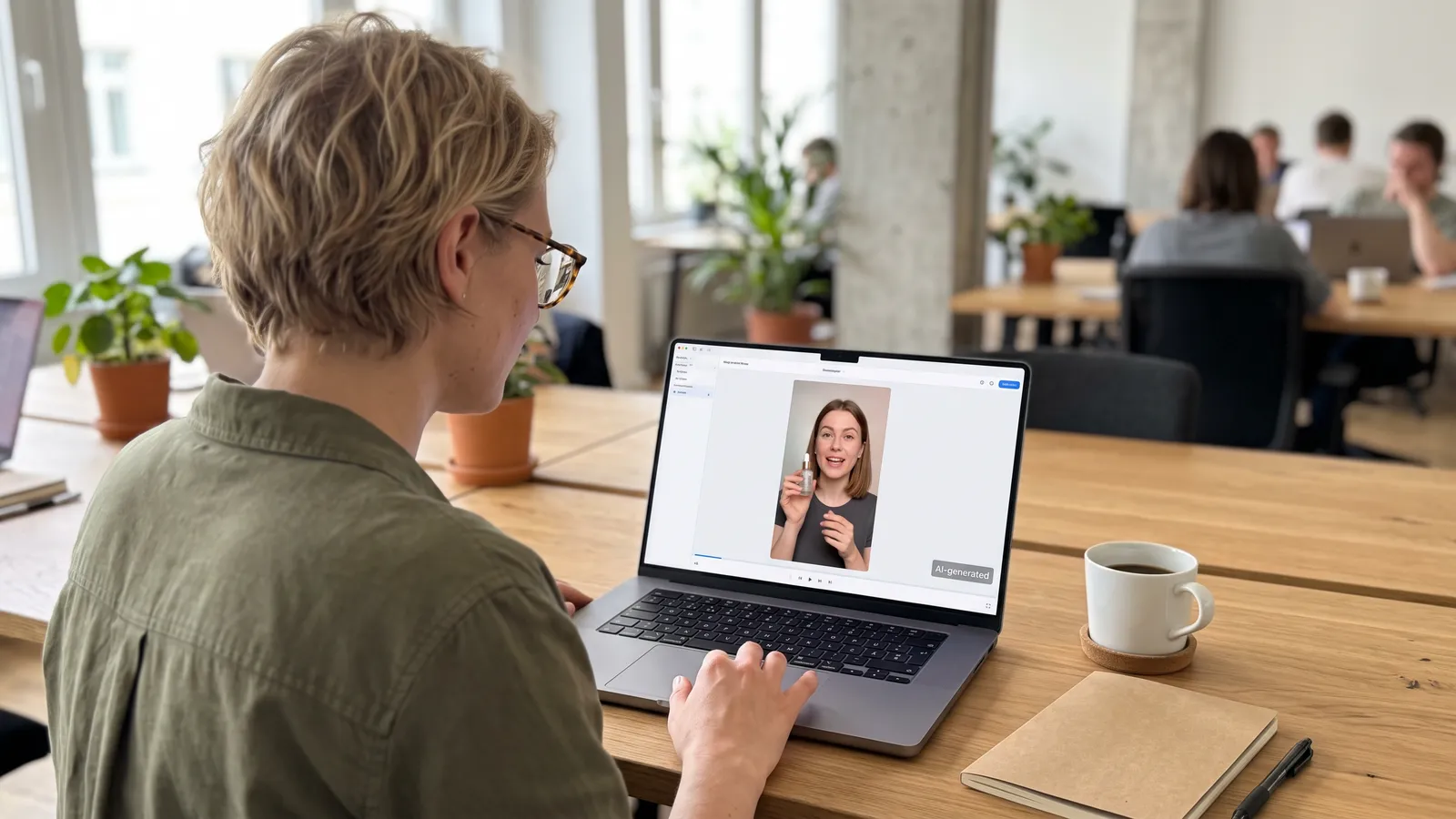
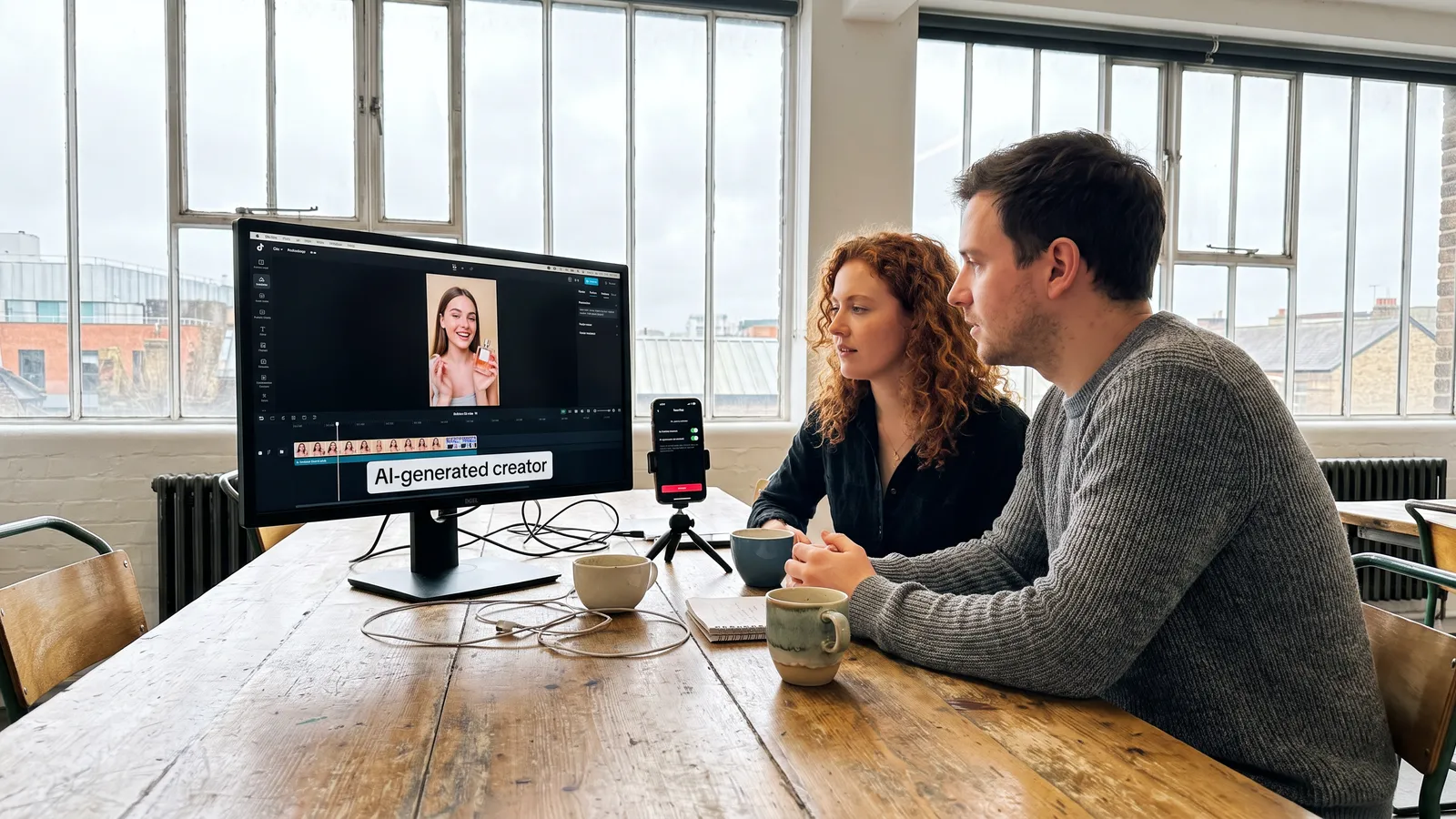
At Sawa Films we always disclose AI creators, with no exceptions:
— An on screen line in the video, in Arabic and English.
— A disclosure in the caption, in both languages.
— The platform's own AI label switched on where it exists.
— No real person's likeness without their consent, and no national symbols or public figures without approval.
FAQ
Do I have to label AI-generated ads on TikTok?
TikTok has said it requires creators to label realistic AI-generated content, and it can auto-label content that carries C2PA Content Credentials. If your ad looks realistic, label it.
Will the "AI info" label hurt my Instagram ad?
Meta applies the label to inform viewers, not to remove content. A well made ad with an honest label keeps its message.
Are there AI ad disclosure laws in Saudi Arabia and the UAE?
We did not find a specific AI ad label rule. SDAIA's Deepfakes Guidelines stress watermarking and consent, and the UAE Media Council has warned against AI misuse. Rules are evolving, so follow platform policies and seek legal advice.
Sources
Meta: Our Approach to Labeling AI-Generated Content and Manipulated Media (opens in a new tab)
Snap Advertising Policies (opens in a new tab)
Arab News: SDAIA issues deepfakes guidelines to regulate responsible AI use (opens in a new tab)