AI video localization for ads means taking one video ad and adapting it for another language and market with AI: translated voice, matched lip movement, new captions and adjusted on-screen text. For Gulf brands that sell in Arabic and English, it can turn one good ad into two. But translation alone is not localization. This guide explains what the tools do today, where they fall short in Arabic, a step by step process and the mistakes to avoid.
What Is AI Video Localization for Ads?
AI video localization is the use of AI to translate and adapt a video ad's speech, captions and text for a new audience. It usually covers four layers:
- Voice. A translated voice track, sometimes in a voice that resembles the original speaker.
- Lips. Lip sync that matches mouth movement to the new language.
- Captions. Subtitles in the new language, timed to the new audio.
- On-screen text. Supers, product names, offers and the end card.
Localization adds a fifth layer AI cannot do alone: deciding what should change for the culture, not just the language.
Which Platforms Offer AI Dubbing Today?
Two of the biggest platforms have built AI dubbing into their own tools, with different scopes.
- TikTok Symphony. TikTok announced Symphony AI Dubbing as a tool that automatically detects the original language in a video, then transcribes, translates and produces a dubbed version, in 10+ languages and dialects. The same announcement described stock avatars licensed for commercial use with over 30 languages. Our explainer on TikTok Symphony for brands covers the suite.
- YouTube automatic dubbing. YouTube's help page says automatic dubbing creates translated audio tracks for uploaded videos, and viewers can switch between the original and dubbed tracks. For Arabic, it works only with English: Arabic videos can be dubbed into English, and Arabic dubs are available for videos originally in English or Spanish.
Check each tool's current language list in your own account, because both change over time.
Where Does AI Dubbing Fall Short in Arabic?
It falls short on dialect, names and nuance, which are exactly what Gulf audiences notice first.
- Dialect. A Saudi viewer, an Emirati viewer and a Qatari viewer hear the difference between Gulf dialect and formal Modern Standard Arabic immediately. Most AI dubs default to one form.
- Names and terms. YouTube's help page warns that dubs may contain mispronunciations and mistranslated proper nouns, idioms or jargon. Brand names, product names and place names are the usual victims.
- Voice match. The same page notes voice matching can be imperfect.
- Editing. On YouTube you cannot edit an automatic dub; if it is wrong, you correct the original video language and it regenerates.
For voice choices specifically, our guide to Arabic AI voice over for ads explains dialect and tone.
How Do You Localize a Video Ad With AI, Step by Step?
Plan for two languages before you shoot, then use AI for the heavy lifting and people for the decisions.
- Write the script for both markets. Mark lines that need a cultural change, not only a translation.
- Keep text out of the picture. Add captions and supers in the edit, so they can be swapped per language.
- Leave space for longer lines. Arabic and English lines run different lengths; leave pauses so the dub does not rush.
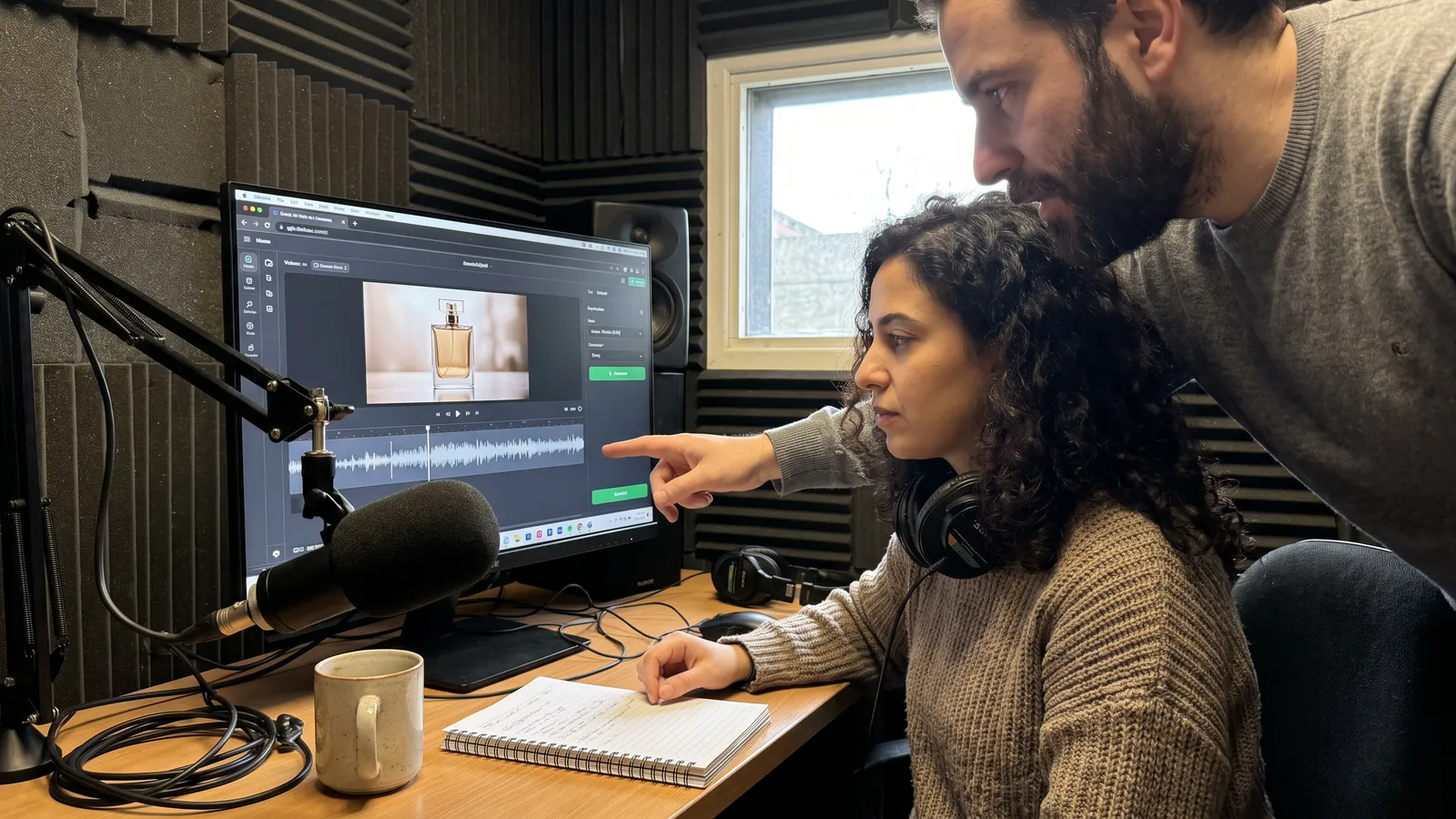
- Generate the dub. Use the platform tool or a dubbing tool, choosing Gulf dialect or Modern Standard Arabic on purpose.
- Check lip sync on faces. Where a face speaks to camera, check that the mouth matches; if not, cut to a product shot during that line.
- Rebuild captions and the end card. Arabic right to left, properly connected, inside the safe zone.
- Native review. A Gulf Arabic speaker watches every version before it runs.
- Label it. Disclose AI where the platform asks.
What Should Change Beyond the Language?
Change anything a local viewer would find odd, even if the translation is perfect.
- Occasions. An English ad about a holiday sale becomes an Arabic ad about Eid or National Day.
- Settings and wardrobe. Make sure the people and places fit the market you are speaking to.
- Humour. Jokes and wordplay rarely survive translation. Rewrite them.
- Proof. Testimonials work best from someone who sounds like the viewer.
How Should Localized Ads Be Disclosed?
Disclose AI the same way you would for any AI-made ad. TikTok's Ads Manager help page asks advertisers to switch on "This ad contains AI-generated content" for non Spark ads with image, video or audio that is fully AI-generated or significantly modified by AI, which includes a dubbed voice. YouTube marks automatically dubbed videos as "auto-dubbed" in the video description.
At Sawa Films a director oversees every version and we always disclose AI.
A Walked-Through Example
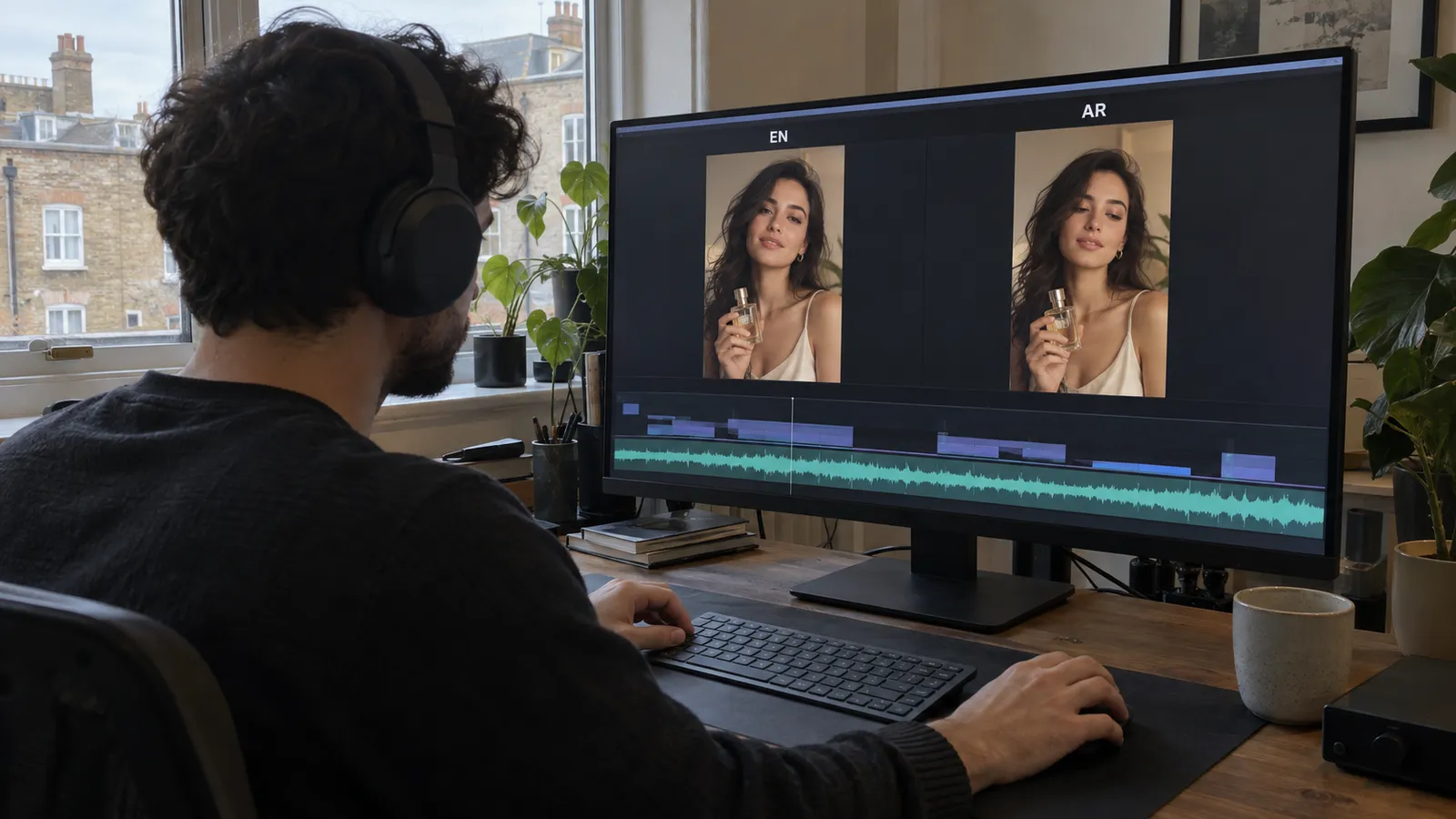
Say you run a fragrance brand in Dubai with a strong English UGC ad featuring a British creator, and you want an Arabic version for Saudi Arabia. This is an example of the method, not a real client.
- Decide what changes. The creator's line "my go-to for a night out" becomes a line about a family wedding, which fits the Saudi audience.
- Dub with care. Generate the Arabic voice in Gulf dialect and check the brand name is pronounced correctly.
- Fix the face problem. Where lip sync looks wrong, cut to the bottle and the spray for that line.
- Rebuild text. New Arabic captions in the edit, the end card in Arabic.
- Native check. A Saudi colleague reviews tone, dialect and wording.
- Test. Run the localized version against a native Arabic UGC ad made from scratch, and keep whichever sells better.
Checklist Before You Run a Localized Ad
- Script reviewed for culture, not only language.
- Dialect chosen on purpose.
- Brand and product names pronounced correctly.
- Lip sync checked, or cut away where it fails.
- Arabic captions right to left and connected.
- Native speaker review done.
- AI disclosure on.
Common Mistakes in AI Video Localization
- Translating the joke. It lands in one language and falls flat in the other.
- Burned-in English text. Text baked into the picture cannot be swapped; keep it in the edit.
- One dialect for everyone. Choose per market and audience.
- No native review. A wrong word in Arabic is the first thing a Gulf viewer will comment on.
- Assuming the dub is the ad. A localized ad sometimes needs a new opening, not just a new voice.
AI makes a second language reachable. A person who speaks it still decides whether the ad sounds like home.
FAQ
What is AI video localization?
It is using AI to adapt a video's voice, lip movement, captions and text for another language and market. Good localization also changes cultural details, not only the words.
Does YouTube auto dubbing support Arabic?
Partly. YouTube's help page says Arabic videos can be dubbed into English, and Arabic dubs are available for videos originally in English or Spanish. Dubs may mispronounce names.
Do dubbed ads need an AI label?
Yes, where the platform requires it. TikTok asks for its AI-generated content toggle on non Spark ads with audio fully generated or significantly modified by AI, which covers an AI dub.
Sources
Announcing Symphony Avatars and AI Dubbing (TikTok Newsroom) (opens in a new tab)
Use automatic dubbing (YouTube Help) (opens in a new tab)
How to add disclaimers to ads in TikTok Ads Manager (TikTok Ads Help Center) (opens in a new tab)