AI music for video ads is a soundtrack made by a tool such as Suno, ElevenLabs Music or Google Lyria instead of being licensed from a record label or a stock library. It can give a brand an original track that fits its ad exactly, but only if your plan and the platform allow commercial use. Here is where licensing stands as of November 2026, why trending sounds rarely work in paid ads, and how to pick a Gulf-friendly mood and check rights.
What Is AI Music for Video Ads?
It is an original track made from a text prompt describing genre, tempo, instruments and feeling, shaped to your ad's length and mood.
The tools Gulf brands meet most often:
- Suno. Full songs with vocals, or instrumentals. In September 2026 it launched its v6 models, which The Rundown reports were developed with Warner Music Group, BMG and Believe.
- Udio. Another song generator with its own rules. Read its current terms before any ad use.
- ElevenLabs Music. ElevenLabs says its music was built in partnership with artists, labels and publishers and is cleared for broad commercial use, with rights that vary by plan.
- Google Lyria. Google DeepMind's music model, offered in places such as Gemini, YouTube Shorts, Google Vids and Google AI Studio. The newest version on Google's page is Lyria 3.5.
Can You Use AI Music in Commercial Ads?
Yes, on the right plan and within the terms of the tool you used. The rules differ by tool and by plan, and the plan you were on when you made the track is what counts.
Examples as of November 2026:
- Suno. Its help center says songs made on the free Basic plan are owned by Suno and may be used only for non-commercial purposes. Songs made on Pro or Premier are owned by the user.
- Copyright. The same article warns that the output may not be eligible for copyright protection. You may be allowed to use the track, yet unable to stop others from copying it.
- ElevenLabs. Its music page lists the free plan as personal use only, with commercial use on paid plans. Its FAQ says self-serve plans allow online and offline commercial use except film, TV and games.
- Google Lyria. Google says every Lyria track carries a SynthID watermark so AI-made music can be detected. The page does not set out commercial terms, so check the terms of the Google product you used.
The law is still moving: The Rundown reports that Universal and Sony are still pursuing their lawsuit against Suno, which Suno disputes. So use a paid plan that allows commercial use, keep the terms, and never prompt for a real artist.
Why Can't You Use Trending TikTok Sounds in Ads?
Most trending songs are licensed for personal posts, not business use, so brands need the platform's commercial libraries or their own licensed music.
TikTok's Commercial Music Library is a pre-cleared library of 1 million songs that TikTok says are free for businesses to use in organic content, video ads and branded content. TikTok also says businesses cannot use the general music library for commercial use, and tells anyone using another user's original sound to consult their legal team about a proper license.
On Instagram, Meta's help center says the licensed music library is for personal, non-commercial use, and certain business accounts and post types cannot access it. The alternative is Meta's Sound Collection: over 14,000 royalty-free songs and sounds that Meta says can be used for commercial purposes like ads.
How to Choose a Music Mood for Gulf Audiences
Pick the mood from the product and the moment, then add regional colour with restraint. Gulf viewers hear regional instruments every day, so a lazy imitation stands out fast.
- Start with the feeling. Calm, warm, playful or proud. Then decide whether a regional touch helps.
- Name real instruments. Oud, qanun, ney or darbuka give a clearer result than "Arabic music".
- Use a Khaleeji rhythm only when it fits. It may suit a celebratory National Day ad, not a quiet skincare routine.
- Skip the cliché pack. Generic "desert" music with wind and camel bells sounds like a tourist video, not a local brand.
- Leave room for the voice. Most Gulf ads carry a spoken line. Our guide to Arabic AI voice over for ads covers that side; the music should sit under it.
- Avoid unchecked Arabic lyrics. AI vocals can mispronounce words or sing lines that mean nothing. An instrumental is safer for most ads.
A Walked-Through Example
Say you sell a home fragrance diffuser online from Doha and want a 20 second Instagram Reels ad for winter. This is an example of the method, not a real client.
- Brief the mood. Calm, warm, an evening at home. Soft oud, light percussion, no vocals, slow tempo.
- Generate on a paid plan. Make several versions and save the plan name, date and prompt for each.
- Fit the edit. Cut to 20 seconds, with a clear start in the first second and a soft ending under the end card.
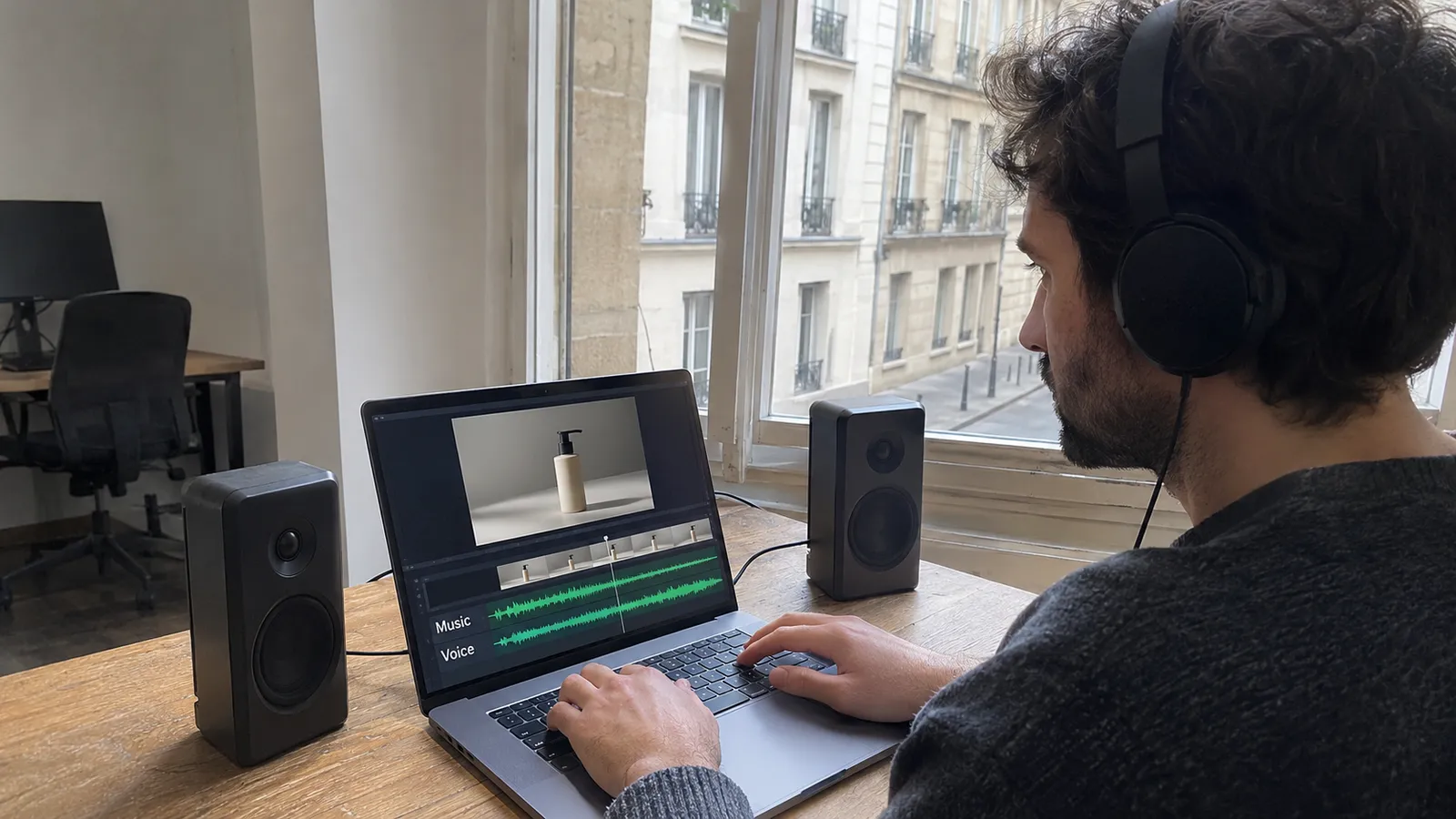
- Check the mix. Play it with the Arabic voice line on a phone speaker. If the oud fights the voice, lower it or pick another version.
- Check rights and disclose. Confirm the terms allow ads, that the melody resembles no known song, and label the ad as AI-made where the platform asks.
How to Check Music Rights Before Publishing
Check the plan, the terms and the sound itself before any AI track goes into a paid ad:
- The track was made on a plan that allows commercial use.
- You saved the terms page, plan name, date and prompt.
- The prompt named no real artist or song.
- Nobody on the team recognises the melody.
- The use fits the terms: online ads, TV and film can be treated differently.
- For platform trends, you used the Commercial Music Library or Sound Collection.
- If a freelancer or agency made it, the contract names the tool and plan.
Do You Need to Disclose AI Music in an Ad?
Yes, treat AI music like any other AI element and be open about it. Follow each platform's AI labelling settings, and answer honestly when a customer or platform asks.
Lyria's SynthID watermark also means AI music can be identified anyway. Sawa always discloses AI in its ads, and we never suggest hiding it. Our guide to AI generated ads disclosure explains the labels on each platform.
Common Mistakes With AI Music in Ads
- A free plan track in a paid ad. On Suno, free Basic songs are for non-commercial use only.
- Prompting with a famous name. Asking for a real singer's style invites trouble.
- Trusting the sound picker. A sound offered to your personal account is not cleared for a business ad.
- No records. If a platform or rights holder asks, you need the plan, date and terms.
FAQ
Which AI music generator is best for ads?
No single tool is best. Choose one whose current terms allow commercial use on your plan and that handles instrumentals well, such as Suno on a paid plan or ElevenLabs Music, and reread the terms before each campaign.
Is AI-generated music copyright free?
Not automatically. The tool's terms decide how you may use the track, and Suno notes its output may not be eligible for copyright protection, so you may not be able to stop others from copying it.
Can I use TikTok's Commercial Music Library in ads?
Yes. TikTok says songs in its Commercial Music Library are free for businesses to use in organic content, video ads and branded content.
Sources
Who owns the songs you make with Suno? (Suno Help Center) (opens in a new tab)
Suno launches v6 with music partners and plans paid fan remixes (The Rundown) (opens in a new tab)
Eleven Music (ElevenLabs) (opens in a new tab)
Lyria (Google DeepMind) (opens in a new tab)
Commercial Music Library (TikTok Ads Help Center) (opens in a new tab)
Access to the licensed music library on Instagram (Instagram Help Center) (opens in a new tab)